Showing posts with label Luke. Show all posts

Wednesday, November 13, 2013

November 13 – Luke 23, and John 18 & 19

Below are my thoughts from the daily Bible reading of the West Side Church of Christ. Today’s reading comes from Luke 23, and John 18 & 19. Before reading I invite you to pray and asked God to speak to you as you read his word. Also above in the tabs is a link to the Bible reading plan.
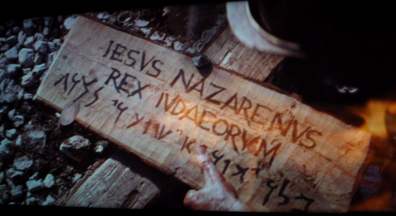
Photo Credit: Serf Publishing Inc.

The reason the Jews chanted crucify was they felt threatened. They felt threatened by the claims Jesus made. They felt threatened that He might mess up the power they had by causing a revolt, and bringing the hand of Rome down even stronger. So to get rid of the threat, they sought Jesus death. I do not believe any of this went unnoticed by Pilate.

When Jesus was placed on the cross, Pilate had a sign simply reading … “Jesus of Nazareth, the King of the Jews.” (John 19:19 NLT) Did Pilate do this because he really believed Jesus was the King of the Jews? I do not believe so. Did he do this because he couldn't stand what the Jewish leaders were making him do? Possibly. Did he do this to get back at the Jews? Absolutely. I am sure he saw these people as a problem, so just to grind it in, he did something that made them mad.

And did it ever. Like little children crying to their parents to make someone else change their behavior, they objected and said … “Change it from ‘The King of the Jews’ to “He said, I am King of the Jews.” (John 19:21 NLT) They did not want people believing that Jesus was their King. But they did not get their way. Pilate told them no.


What the Jews did not understand is that what Pilate had written was the truth. Jesus was the King of the Jews. His family tree took Him all the way back to King David. His blood line was pure royalty, both as a descendent of David and as the Son of God. Now the King of the Jews was about to become the savior of the world. These men who sent Jesus to cross, who felt threatened by His claims, did what was necessary. Their fear brought salvation to the world. For that I am thankful. 

Tuesday, November 5, 2013

November 5 – Matthew 23 & Luke 20 & 21

Below are my thoughts from the daily Bible reading of the West Side Church of Christ. Today’s reading comes from Matthew 23 & Luke 20 & 21. Before reading I invite you to pray and asked God to speak to you as you read his word. Also above in the tabs is a link to the Bible reading plan.

I apologize for the lack of posts these last few days. We have been out of town and while I have had internet access I did not have the ability to use my laptop to post. Thank you for your understanding.

There are many areas that people feel uncomfortable discussing in a church setting ... sex and money tend to be two that top the list. However, Jesus does not steer clear of either; especially when it comes to money. Jesus was not uncomfortable with it. We only are because we often have a warped view of money; mainly because we look at it as ours.

One day Jesus was in the Temple with His disciples. As He stood there watching the crowds he noticed two distinct people. The first was a group of people. They were wealthy people. Tradition and historical records have taught us that the money was given in such a way that when it was placed in the offering jars a sound would ring out. The sound indicated the level of the gifts. Through this wealthy people were able to show off what they were giving.

The second was a single widow. This widow came to the time of offering and dropped in two small coins. These coins wouldn’t have made much of a racket, especially in a crowded and noisy Temple. While the masses missed what she had done, the creator of the universe did not. He saw more than anyone in the crowd would have seen even if they were watching … He saw her heart.

She did not give for show. She did not give to be honored by those around her. She didn’t give because of an obligation. She gave because of love. Jesus indicated this much as He called to attention her gift … “this poor widow has given more than all the rest of them. For they have given a tiny part of their surplus, but she, poor as she is, has given everything she has.” (Luke 21:3-4 NLT).

Our giving reflects our heart. Our giving reflects our love of the church. Our giving reflects our love of our God. Be honest with yourself … if you were in the Temple, what would Jesus say about your giving?

Want to hear more about how to handle your finances join us for worship at West Side as we take a Clear Thinking Approach to Stewardship. 

Wednesday, October 30, 2013

October 30 – Luke 18

Below are my thoughts from the daily Bible reading of the West Side Church of Christ. Today’s reading comes from Luke 18. Before reading I invite you to pray and asked God to speak to you as you read his word. Also above in the tabs is a link to the Bible reading plan.
Photo Credit: Microsoft Clip Art

If we return to our theme of grouping we come to Luke 18 and see a series of stories strung together. We see the persistent widow who comes to the unjust judge, followed by the Parable where the Pharisee brags he is not a sinner while the tax collector falls broken before God, followed by the story of the little children coming to Jesus. What theme do you see from these stories?

I see the theme of a just but loving God. God is one who serves justice to those who have sinned against him. His love for us forces Him to do so. As I write this my mind goes back to the scene that played out before sitting down to write. I just finished disciplining my daughter for throwing a fit when I told her no to using my iPad at this moment. I would not have shown her love if I did not discipline her for her choice to behave with a fit. Friends that unfortunately is justice produced by love.


But … God does not stop there. Not only does His love require justice, His love also shares forgiveness. The little children coming to Jesus in their purity is what God desires of His children. The tax collector falling broken before God is the process of returning to Jesus with the purity of the children. In that state, God’s love overwhelms in forgiveness. God is not like the unjust judge. It is not through persistence that God’s hand is forced. God is always just, both in administering justice and love. But we can learn from the widow, we must always come before God, persistently in a broken state realizing that without God we are not like the little children. 

Monday, October 14, 2013

October 14 – Matthew 13 & Luke 8

Below are my thoughts from the daily Bible reading of the West Side Church of Christ. Today’s reading comes from Matthew 13 & Luke 8. Before reading I invite you to pray and asked God to speak to you as you read his word. Also above in the tabs is a link to the Bible reading plan.

One of the tricks to reading the Bible is getting past the chapter and verse markings. They are valuable tools. They allow for us to easily locate any section of Scripture. It would be incredibly difficult to navigate the Bible without them. However, they are not God ordained markings. They were added by the hands of humans needing a referencing system. Sometimes they even hinder our reading. When doing a Bible reading plan we typically break the Bible down by reading through select chapters. We have done so in our reading plan. That is why we have had days with multiple chapters and days with very few. There are places in Scripture that the chapter ends, but the thought of the author does not. These issues present some minor problems to our reading.

Now that we are in the New Testament, and reading the Gospels, let me share with you a writing technique of the Gospel authors. Remember the writers did not put the chapter and verse notations in their works. They also at times wrote in chronological order. But at other times they left chronological order to highlight the teachings of Jesus. We know this as grouping. Sometimes the authors will take a topic of Jesus and group it together regardless of the chronological timeframe.

Each chapter we read has a general topic to it. Matthew 13 is heavily concerned with the coming Kingdom of heaven and its growth. That is the heart of the Parable of the Sower, or the Wheat and Weeds, or the Mustard Seed, or the Yeast. They all point to the coming kingdom and its growth. If we want to understand the growth of God’s kingdom one of the best places to turn in our Bible’s is to Matthew 13 because it is one grouping of Jesus teaching on it.

When we look at Luke 8 can we tell what the major thought from Luke is? This is a trickier one in my opinion. The reason we read Matthew 13 and Luke 8 today is because they both start with the Parable of the Sower. However, this is where the man added chapter and verses throw us off. Luke offers two themes in this chapter. The first is the Kingdom concept of Matthew 13. But the chapter continues with a few more stories … Jesus calms the storm, Jesus heals a demon-possessed man, Jesus heals a sick woman, and Jesus raises a dead girl back to life. What do you think Luke’s theme is here? It suggests to me and understanding of Jesus power over the natural laws. Jesus has power over nature in calming the storm, Jesus has power over the spiritual world in casting out a demon, Jesus has power over the sicknesses of this life in healing the woman, and finally Jesus has power over death.


Understanding this grouping concept allows us to get a fuller understanding of the individual stories. When one puzzles us we can look to those in front and behind, regardless of their chapter and verse markings, to gain a full picture of the authors intent. 

Wednesday, October 9, 2013

October 9 – Matthew 12, Mark 3, & Luke 6

Below are my thoughts from the daily Bible reading of the West Side Church of Christ. Today’s reading comes from Matthew 12, Mark 3, & Luke 6. Before reading I invite you to pray and asked God to speak to you as you read his word. Also above in the tabs is a link to the Bible reading plan.
Photo Credit: Microsoft Clip Art

What are you concerned with, the details or the overall project? I have a friend who was a jet engine engineer. Because of confidentiality agreements, she was not allowed to discuss the parts she designed. Regardless of her agreement, she did not know much about the other parts. She only really knew about the part she was responsible for and how it affected the other parts around her. This was done on purpose in part so one person could specialize on one part. Because of this she was oblivious to the other parts of the engine. When we focus too much on one aspect of something, we loose sight of the bigger picture.

That is exactly where the Pharisees where. They were focused on the letter of the Law and not the heart of the Law. The permission for priest to work on the Sabbath (Matthew 12:5), or David getting food for his men (Matthew 12:3-4), or saving a sheep from a well (Matthew 12:11) all point to the fact that God left room for heart in the Law over strict observance to the Law.


Are we guilty of this today? Do we look at what the life of a Christian is supposed to look like and demand it forgetting our freedom and salvation in Christ? Do we forget that we are saved by grace that nothing we can do will save us, and rely and trust on God for it? I am not advocating a life filled with sin because of that freedom, just a life that has assurance regardless of the mistakes we make. 

Saturday, October 5, 2013

October 5 – Matthew 4 & Luke 4-5

Below are my thoughts from the daily Bible reading of the West Side Church of Christ. Today’s reading comes from Matthew 4 & Luke 4-5. Before reading I invite you to pray and asked God to speak to you as you read his word. Also above in the tabs is a link to the Bible reading plan.

The introductory material about Jesus birth is now behind us. Today he begins His public ministry. He does so by going into the Wilderness following His baptism to spend time in prayer, fasting, worship, and simply connecting with God. As He begins His public ministry He does so in unusual ways.

He starts with calling disciples. He also begins to perform miracles. He does things that are far from the normal pattern of new Rabbi’s on the scene. He even does things that anger the religious officials of the day. They are upset that he forgives sins. They are confused as to why he eats with scum (the NIV calls them sinners). Jesus does not do things the way He was supposed to do things.

To conclude this section Luke shares with us Jesus’ words about all this …
Then Jesus gave them this illustration: “No one tears a piece of cloth from a new garment and uses it to patch an old garment. For then the new garment would be ruined, and the new patch wouldn’t even match the old garment. “And no one puts new wine into old wineskins. For the new wine would burst the wineskins, spilling the wine and ruining the skins. New wine must be stored in new wineskins. But no one who drinks the old wine seems to want the new wine. ‘The old is just fine,’ they say.” Luke 5:36-39 NLT
Jesus has basically come and said the old system is about to be finished. I am bringing something new. There will be people who do not accept it, because they are fine with the old way. But we know new against old does not always work. New wine in old wine skins will break the wine skins. A new patch on old clothes will tear the old clothes as the new patch begins to shrink while washing. New sometimes has to go with new … and that is ok. 

Wednesday, October 2, 2013

October 2 – Matthew 1 & Luke 2

Below are my thoughts from the daily Bible reading of the West Side Church of Christ. Today’s reading comes from Matthew 1 & Luke 2. Before reading I invite you to pray and asked God to speak to you as you read his word. Also above in the tabs is a link to the Bible reading plan.

The story of Jesus birth and all that happened are simply wonderful and amazing. Matthew starts his Gospel with what some might consider a boring genealogy. This genealogy however establishes Jesus as first being a Jew and second being from the right family tree as predicted by God. This was an incredibly foundation for Matthew to build upon.

What I also love about our reading is the awesome events that play out.
  •   Joseph is visited by an angel in a dream – Matthew 1:18-25
  •  Shepherds are sent to Bethlehem to see the child because angels visited them – Luke 2:8-20
  • When Jesus is presented at the temple two people offer amazing prophecies, first by Simeon – Luke 2:25-35 and second by Anna – Luke 2:26-40.

 This birth is special. There is now way around it. Joseph and Mary had to know that what was happening was all because of God. How would you have felt to be chosen by God to do something so great? Would it have been hard or easy to accept knowing your life was going to drastically change? These are tough questions to answer. 

Tuesday, October 1, 2013

October 1 – Luke 1 & John 1

Below are my thoughts from the daily Bible reading of the West Side Church of Christ. Today’s reading comes from Luke 1 & John 1. Before reading I invite you to pray and asked God to speak to you as you read his word. Also above in the tabs is a link to the Bible reading plan.

We have finally arrived and started the New Testament. Our first encounter of the New Testament is the book of Luke. Each gospel writer wrote to a specific audience and for a specific purpose. Their audience and purpose dictate the way their gospel is arranged. We will examine Luke’s purpose and writing as we start the New Testament.

Luke’s gospel was written for a Gentile audience. We know that Luke is the author of both Luke and Acts. We believe Acts is simple a continuation of his first book Luke. There is speculation that these two works were written to present to the Roman Emperor of the day as a defense for the Apostle Paul. Paul was on trial because he had appealed to Caesar when he was arrested in Jerusalem (Acts 21-28). To bring the Emperor up to speed on what Christianity is he needed the whole story. So Luke wrote his Gospel as well as a history of the church. Now we do not fully know this was the case for sure, however it is evident the audience of Luke was not Jewish.

The first chapter of Luke is very interesting. Two angels appear to two Jews. Each Jew is told they are going to have a child. One is an old man named Zechariah, and the other was a teenage girl from Nazareth named Mary.

Zechariah was a priest and as a priest he knew the Old Testament very well. He knew that a coming Messiah was promised. Many in his day thought the time was just right. To convey this understanding to a Gentile audience Luke includes a prophecy of Zechariah into his Gospel that outlines the History of Israel and the promise past down from God. With this Luke has established the tradition which the Jews had been waiting for the one to come.

Luke does this again with Mary. When the angel comes and shares that God is with her and that she will give birth to His Son, she sings a song of praise. This song of praise highlights the tradition and the promise that God had made through Abraham. The small town teenage girl knew her scripture very well.


What Luke has done is given the back story needed. In fact he had done what we at West Side did with The Story. We unveiled the problem that sin created and we showed by walking through the Old Testament how God worked to restore mankind. This is an important step for Luke to make, because this is all the foundation for everything Jesus will do and start with His time on earth. 

Tuesday, February 9, 2010

An Introduction to Acts!

If you are looking for Tuesday February 9ths Bible reading please look below.

Throughout the year we will begin many new books of the Bible. With each new book I will try to provide you with some information concerning the background of the book. That background will typically be: Purpose, Author, and Date of the book.

The Purpose
There are several reasons this book may have been written. The author … Luke … states in the opening verses of his previous book … The Gospel of Luke … that he wanted to provide “an orderly account for you.” Many see the book of Acts as a continuation of the book of Luke. Thus you would have an account beginning at the announcement of the birth of Christ, traveling through his ministry to his death and resurrection. The second book picks up with the beginning of the church and then highlights the spread of the church … beginning in Jerusalem and going to the outer ends of the world.

Many also believe that Luke was also putting together a defense for the Apostles Paul. At the end of Acts Paul is on house arrest awaiting trial before Caesar. Some argue that Luke has researched all this information to present to Caesar to show what Christianity was and how it spread.

Both of these reasons present us a work that gives us insight into the beginning and growth of the church. Without Acts we would have not know about Pentecost or have information of conversion to Chrisitanity. Without Acts we would have no record of the early Christian church.

The Author
The book of Acts provides for us internal evidence as to who the author is. No where in the book does the author identify himself. It does indicate that whoever wrote the third gospel also wrote Acts. We can also see that the style and language indicates one author for both books. Within the book we see passages that indicate the author is personally familiar with what he describes. The author is also present in several places as indicated by the usage of “we.” (15:10-17; 20:5-15; 21:1-18; 27:1-28:16). Paul identifies Luke as one of his companions on several occasions … Philemon 23-23 & Colossians 4:10-17, we also learn here that Luke is a Doctor. Throughout his writing we see that many technical terms are used.

While the book itself points to authorship of Luke, externally there is evidence that credits him as author. Some early Christian writers give Luke credit for writing the third gospel. Since they are of the same author we can take liberty and assign him credit for Acts. But we do not have to stop there. Other early church fathers and writers, men like Irenaeus, Clement of Alexandria, Tertullian, and Jerome, speak directly of Luke as author. Thus the case can be closed; Luke is the author of Acts.

Date of the Book
Dating the book is directly linked to authorship. If Luke wrote Acts, it had to be in the first Century. This is especially true if Luke is a contemporary of Paul. Acts would have been written after his gospel, which tends to be dated around 60 AD. Thus a date of 63 AD is very likely.

There could be a chance the book was written later than that. Is the imprisonment of Paul that is described in the closing verses the one where he is martyred? If so, tradition tells us Paul was killed around 67/68 AD. This would allow Acts to be penned after Paul’s death, and could allow writing in the 70’s or 80’s. However, many scholars believe the imprisonment described was not his final Roman imprisonment. Thus we believe 63 AD. to be a very good date for the book of Acts.